How to Send Flowers to Tunisia from Abroad
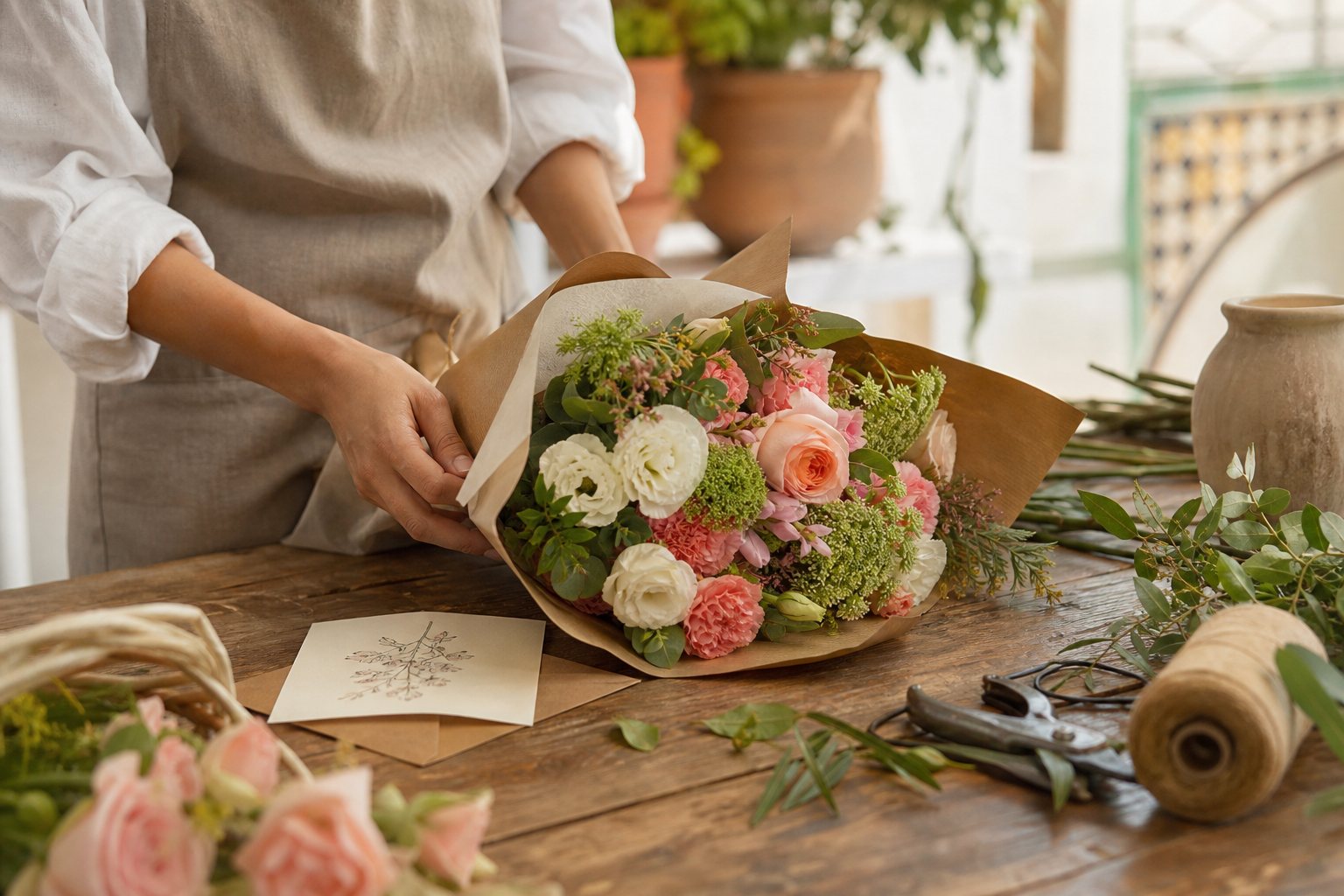
Yes, you can send flowers to Tunisia from abroad without a Tunisian bank card and without phoning a shop in Tunis yourself. You order online, pay in USD by card or PayPal, and a local florist in Tunisia makes the bouquet and delivers it by hand.
Most people who order this way are Tunisians living in France, Italy, Germany, Canada, the Gulf or the United States, along with partners and friends of people back home. This guide covers the practical side: how it works, when to order, what it costs, which flowers suit Tunisian customs and what the florist needs from you.
Can you send flowers to Tunisia from another country?
You can, and nothing crosses a border. When you send flowers to Tunisia from abroad through TunisiaFlowers, the order goes to a florist who works near the recipient. The flowers are fresh local stems, arranged in Tunisia and carried to the door, so there is no customs form and no box travelling for days.
Coverage is national. Most orders go to Tunis, Sfax and Sousse, but florists also deliver to the Cap Bon towns, the Sahel, the interior and the south, including Djerba. The full list of city pages is on the delivery page.
How does ordering from abroad work, step by step?
- Choose an arrangement from the flower catalog. There are 152 bouquets, plants and gifts.
- Enter the recipient's name, address and Tunisian phone number.
- Pick the delivery date and write your card message. A printed card is included with every order.
- Add extras if you want them: chocolates, a vase, a teddy bear or balloons.
- Pay in USD by card through Stripe or with PayPal. EUR and GBP prices are shown only as a reference.
- The local florist prepares the order and delivers it by hand.
Write the card in the language the recipient reads most easily. French and Arabic are both normal on a card in Tunisia, and a short message in the family's own words lands better than a long formal one.
How long does delivery take and when should you order?
Next-day delivery is available across Tunisia. Same-day delivery is possible in major cities such as Tunis, Sfax and Sousse when the order is placed early in the day, Tunisian time.
That last point matters. Tunisia is on UTC+1 all year and does not change its clocks. In winter it shares the time of Paris, Rome and Berlin and is one hour ahead of London. In summer it is one hour behind Paris and level with London. From New York or Montreal, Tunisia is six hours ahead in winter and five in summer, so an order placed after lunch on the American East Coast arrives in the florist's inbox in the evening.
For busy dates, order two to three days ahead:
- Valentine's Day, 14 February, now widely marked by couples in the cities.
- Mother's Day (Fête des Mères), the last Sunday of May. In 2027 that is 30 May.
- National Women's Day, 13 August, a public holiday that commemorates the 1956 Code of Personal Status.
- Aïd el-Fitr and Aïd el-Kébir, when families visit each other. The dates follow the lunar calendar and move about eleven days earlier each year, so check them before you order.
During Ramadan, shops and offices keep shorter hours and the household is busy before sunset. Ask for a morning or early afternoon delivery. In July and August, when weddings fill the calendar and the midday heat is strong, flowers are best received in the morning, and many families are at a summer house on the coast, so confirm which address they are using.
How much does it cost to send flowers to Tunisia?
Arrangements on TunisiaFlowers range from USD 63.24 to USD 172.49, and there is a flat delivery fee of USD 14.95 per order. The printed card is included. Add-ons are priced separately at checkout.
You are charged in USD whatever card you use. Your bank converts the amount if your account is in euros, pounds or Canadian dollars, and may add its own foreign transaction fee. You do not need Tunisian dinars, and the recipient pays nothing.
What flowers are appropriate in Tunisia, and which should you avoid?
Tunisia has a real flower culture. Jasmine is the national emblem, and in summer men and women carry a machmoum, a tiny hand-bound jasmine posy. Scent is valued, so roses and lilies are always welcome.
Good choices by occasion:
- Mothers, grandmothers and aunts: roses, lilies or a mixed bouquet in pink, white or pastel tones. Arrangements that arrive in a vase or basket are practical for older relatives.
- Romance: red roses are understood exactly as they are elsewhere. Keep them for a spouse or fiancée.
- Births, graduations and baccalauréat results: bright mixed bouquets. Success at the bac is celebrated by the whole family in early summer.
- A host or a new home: a planter or a compact arrangement, something that needs no work on arrival.
What to avoid:
- Red roses for anyone who is not your partner. For a colleague, a teacher or an in-law, choose mixed colours.
- Wine as an add-on, unless you are certain the recipient drinks. Tunisia is a Muslim-majority country and many households do not serve alcohol. Chocolates are the safe extra.
- Flowers at a burial. Muslim funerals take place quickly and flowers are not part of the ceremony. If you want to show sympathy from abroad, send a restrained white arrangement from the sympathy selection to the family home in the following days, with a short card addressed to the whole family.
What details do you need from the recipient?
Addresses are where most delays come from, so collect these before you order:
- Full name as it is known in the building or the street. Married women in Tunisia usually keep their own family name, so use the name on the doorbell.
- Complete address: street and number, apartment and floor, neighbourhood (cité or quartier), city and governorate. Postal codes have four digits.
- A landmark. In newer suburbs and small towns, house numbers can be missing. "Opposite the pharmacy" or "behind the primary school" is what a driver actually uses.
- A Tunisian mobile number. Local numbers have eight digits after the +216 country code. The florist may call to confirm someone is home.
- A second contact, such as a sibling or neighbour, especially for elderly recipients.
- For a clinic or hospital: the name of the establishment, the patient's full name, the ward or room, and the phone of a relative who is there.
If the flowers are a surprise, say so in the order notes. The florist still needs a working phone number, but will keep the call short and will not reveal who sent them.
Ready to choose? A simple, well-liked starting point is the Cloud Nine Rose Collection, or browse the full catalog and filter by what the person you miss would enjoy.
Frequently asked questions
Can I pay for flowers to Tunisia with a European or American card?
Yes. TunisiaFlowers charges in USD and accepts international cards through Stripe, as well as PayPal. EUR and GBP prices are shown on the site only as a reference.
What is the time difference between Tunisia and Europe or North America?
Tunisia is on UTC+1 all year and does not change its clocks. It matches Paris in winter and is one hour behind it in summer, and it is six hours ahead of New York in winter and five in summer.
Is same-day flower delivery available in Tunisia?
Same-day delivery is available in major cities such as Tunis, Sfax and Sousse when the order is placed early in the day, Tunisian time. Next-day delivery is available across the country.
Should I send flowers to a funeral in Tunisia?
Flowers are not part of a Muslim burial, which usually takes place very quickly. A better gesture from abroad is a restrained white arrangement sent to the family home in the following days, with a short card addressed to the whole family.